Bet on Grand National 2027
 Available in US
One race. 34 runners. Your complete betting guide.
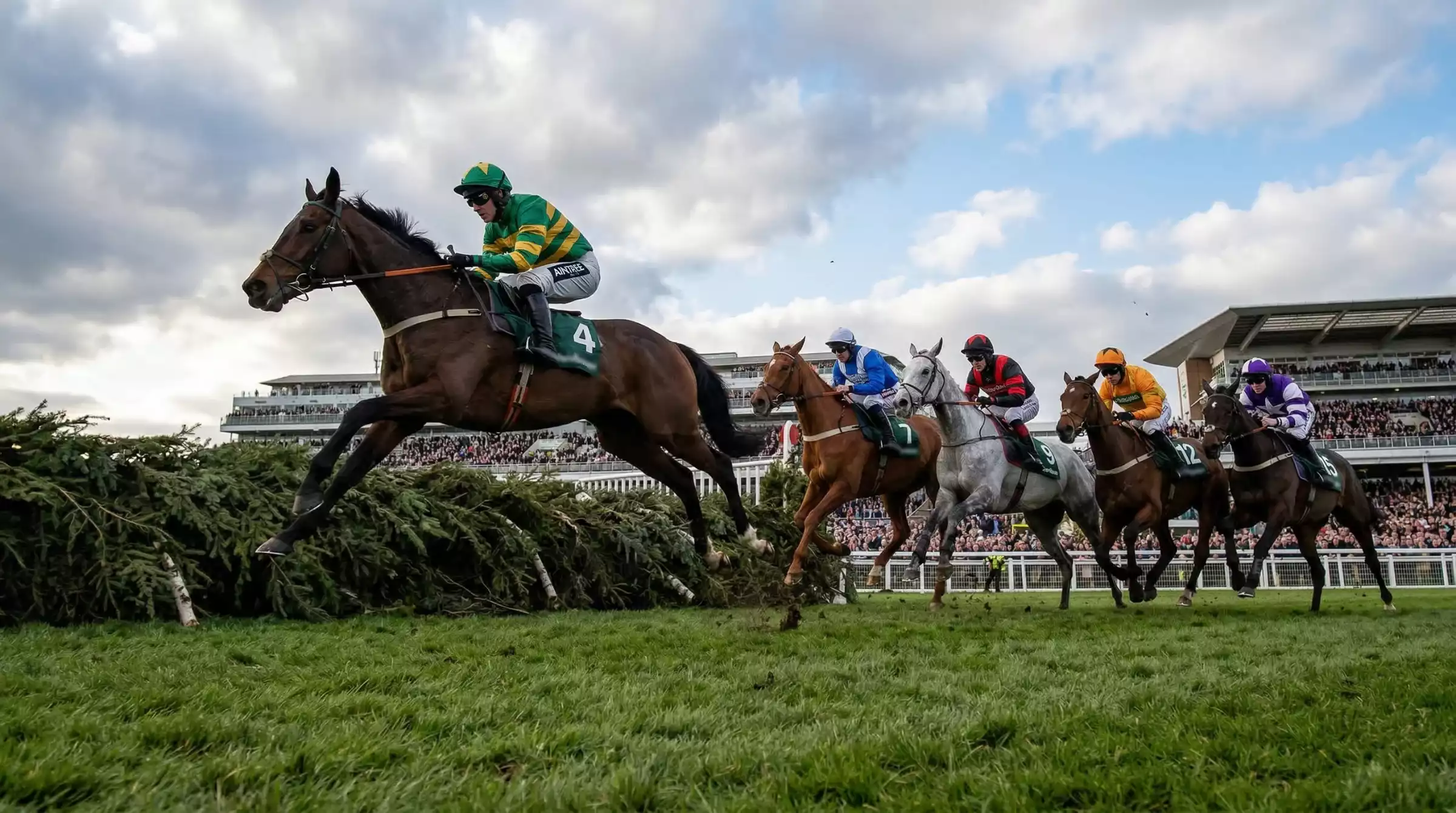
Every April, something peculiar happens across Britain. People who wouldn't normally know a furlong from a fetlock suddenly start studying horse names, comparing odds and debating whether a 33/1 outsider has a genuine chance. The Grand National does that. It turns an entire country into amateur tipsters for one Saturday afternoon, and it has been doing so for nearly two centuries.
According to Entain's global sportsbook data, the Grand National ranked as the world's number one sporting event by total bets placed in 2025, ahead of the Super Bowl and the US Masters. Roughly 13 million people in the United Kingdom place a wager on the race each year — about a third of the adult population. No other single sporting contest in this country comes close to generating that level of casual participation.
This guide is built for all of them: the once-a-year punter picking a horse by name, the returning bettor brushing up on each-way mechanics, and the seasoned form student looking for an analytical edge on the 2026 field. We will walk through how to place a bet from scratch, explain every major bet type, decode the odds, compare bookmaker place terms, profile the leading contenders, and set out practical strategies grounded in data rather than gut feeling. We will also cover the Aintree course itself, its iconic fences, and — because the nation's punt should always be an enjoyable one — how to bet responsibly.
Whether you are opening a betting account for the first time or fine-tuning an ante-post portfolio, everything you need is here.
The Grand National Betting Essentials at a Glance
- The Grand National attracts around £250 million in wagers annually, making it the single biggest betting race on Earth — and 82% of those bets are £5 or less, so you do not need a large bankroll to take part.
- Each-way betting is the most popular format for the National because bookmakers typically pay four or more places on a field of 34 runners, giving your selection multiple ways to return money.
- Odds move significantly between the ante-post market and race day. Backing early can lock in value, but non-runner no bet (NRNB) offers protect you if your horse withdraws.
- Form, weight, ground conditions and trainer record are the four data points that separate informed bets from hopeful ones — the 2025 winner, Nick Rockett, came in at 33/1 and was trained by Willie Mullins, whose stable filled five of the first seven places — including a clean sweep of the podium.
- Always use a UK Gambling Commission-licensed bookmaker. An estimated £9.4 million was staked illegally on the 2025 Grand National alone, with punters on unlicensed sites receiving zero consumer protection.
Why the Grand National Is the World's Biggest Betting Race
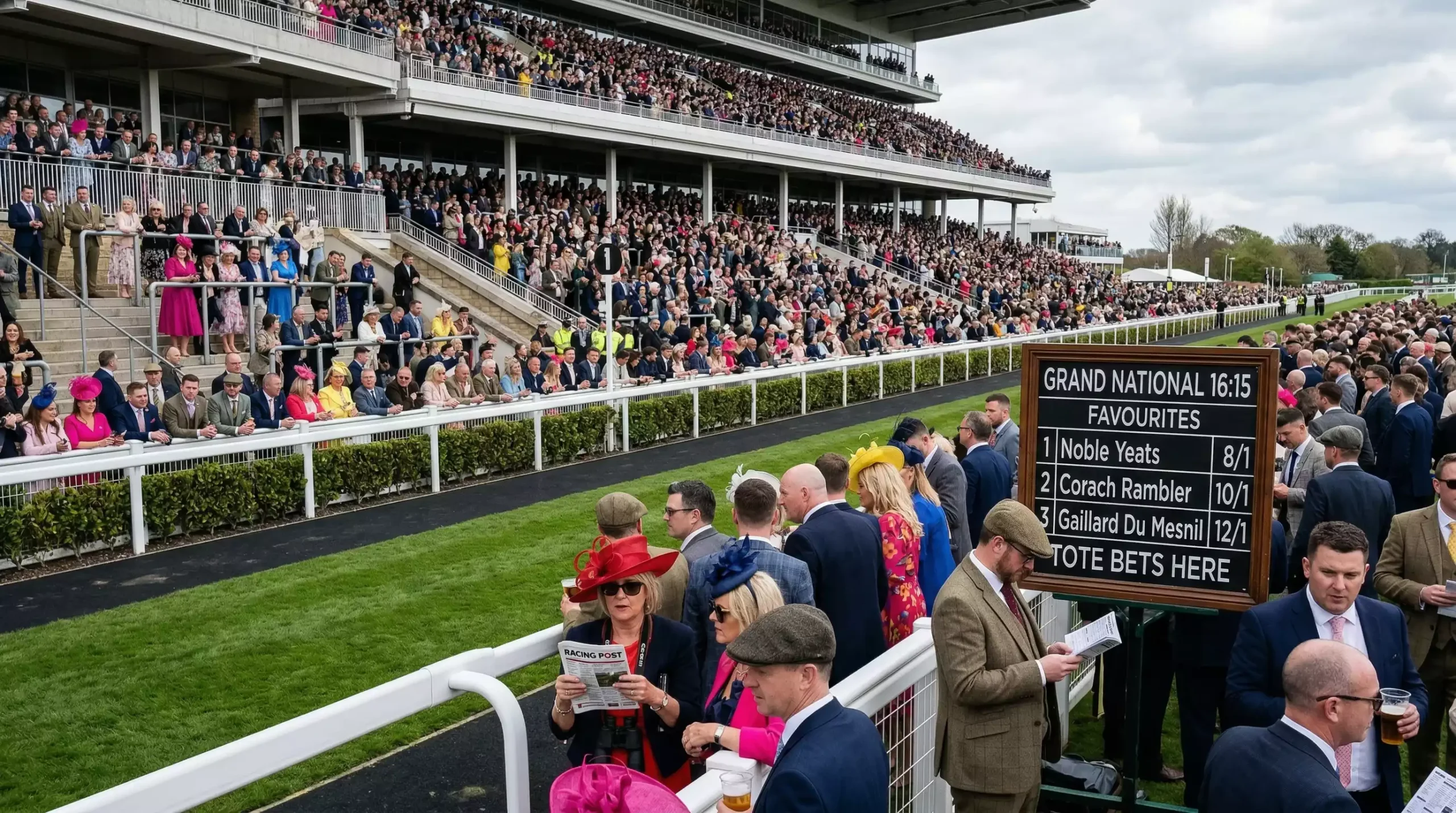
Call it the nation's punt, call it a cultural institution — the numbers speak for themselves. The Betting and Gaming Council estimated that approximately £250 million was wagered on the 2025 Grand National. That is a quarter of a billion pounds staked on a single four-and-a-half-mile steeplechase. To put that in context, Entain's sportsbook data from 2024 showed the Grand National generating 700% more bets than the Cheltenham Gold Cup, which is itself one of the most prestigious races in National Hunt racing. No other horse race — and arguably no other single sporting event in the UK — commands that kind of wagering volume in a single day.
Part of the explanation is reach. The race is broadcast to an estimated 600 million viewers across 140 countries, with ITV's domestic coverage pulling in 5.2 million UK viewers in 2025. But reach alone does not explain the betting figures. Plenty of globally televised events struggle to convert viewers into active participants. The Grand National succeeds because it occupies a unique cultural position: it is the one horse race that people who never bet on horse racing feel entitled to bet on.
"The Grand National and the Super Bowl are cultural phenomena that transcend sports and are annual traditions for recreational customers," said Greg Ferris, Managing Director of Sports at Entain. That comparison is telling. The Super Bowl is the most-bet event in the United States, yet the Grand National consistently outpaces it in Entain's global rankings for total individual bets placed. The difference lies in accessibility. A £2 each-way flutter on a horse with a name you like is a lower barrier to entry than understanding point spreads and prop bets on an American football game.
Gráinne Hurst, CEO of the Betting and Gaming Council, framed it in even simpler terms: "The Grand National is one of the precious few sporting events in this country with the ability to unite the entire nation around a single spectacle. It is the nation's punt." That phrase — the nation's punt — captures something the data confirms. This is not a race that belongs exclusively to racing professionals or habitual gamblers. It belongs to office sweepstakes, living rooms, and pub screens. It belongs to the person who places one bet per year and chooses the horse because its name reminds them of a family pet.
The financial infrastructure behind the event has grown accordingly. Bookmakers devote months of marketing to Grand National weekend, rolling out enhanced place terms, free bet offers, and dedicated in-app experiences. The competitive pressure among operators is intense because capturing a new depositor during the Grand National can mean retaining that customer for the rest of the racing season. Combine this commercial logic with nearly two hundred years of accumulated mythology — Red Rum, Aldaniti, Tiger Roll — and you have a race that generates more betting money each year not by accident, but by cultural compounding.
Who Actually Bets on the Grand National
The popular image of a Grand National punter — sharp-suited, form guide in hand, speaking fluently about going and handicap marks — bears almost no resemblance to reality. The vast majority of people who bet on this race do so once a year, stake modest amounts, and approach the whole exercise as entertainment rather than investment.
The data from Entain's UK sportsbook is striking. In 2024, 82% of in-shop cash bets on the Grand National were £5 or less. Fewer than 1% of bets exceeded £20. Nearly half of the total turnover was generated by stakes of £5 or under. This is not a race driven by high rollers. It is driven by volume — millions of small, casual wagers placed by people who view the Grand National as a social event that happens to involve a betting slip.
The newcomer effect amplifies this pattern. Entain's figures show that 30% of people who bet on the Grand National are either making their first-ever deposit with a bookmaker or returning after a gap of more than twelve months. One in three participants, in other words, treats the race as a standalone occasion rather than part of a regular betting habit. For bookmakers, this creates a distinctive commercial dynamic: the Grand National is the single most effective customer-acquisition event in the British sporting calendar.
How do these casual bettors pick their horse? Not by poring over Racing Post form cards, for the most part. A Ladbrokes/Entain survey in 2025 found that 35% of British punters choose their Grand National selection based on the horse's name alone. Fewer than 29% consult any form data before placing their bet. The rest rely on a mixture of jockey colour preferences, tips from friends, or — that most British of selection criteria — simply liking the look of a horse in the parade ring.
One in three Grand National bettors picks their horse entirely by name. The 2025 race was won by Nick Rockett at 33/1 — a name that, presumably, a few lucky punters picked for its punchy ring alone.
The seasonal spike in participation is also visible in official data. According to the UK Gambling Commission's participation survey (Wave 2, April–July 2025), 7% of British adults reported betting on horse racing in the previous four weeks during that period — a jump of 3 percentage points compared with the January–April wave. The Grand National and the Cheltenham Festival, both falling within that window, are the obvious drivers. For the rest of the year, horse racing occupies a much smaller share of the national betting landscape.
What does this mean for you as a bettor? The Grand National market is shaped overwhelmingly by recreational money. Prices on outsiders can be influenced as much by sentimental name choices as by form analysis. For the analytical punter, that inefficiency is an opportunity. For the once-a-year participant, it is reassurance: you are in excellent company, and the £2 each-way bet you are about to place is the most common wager on the race.
Placing Your First Grand National Bet: Step by Step
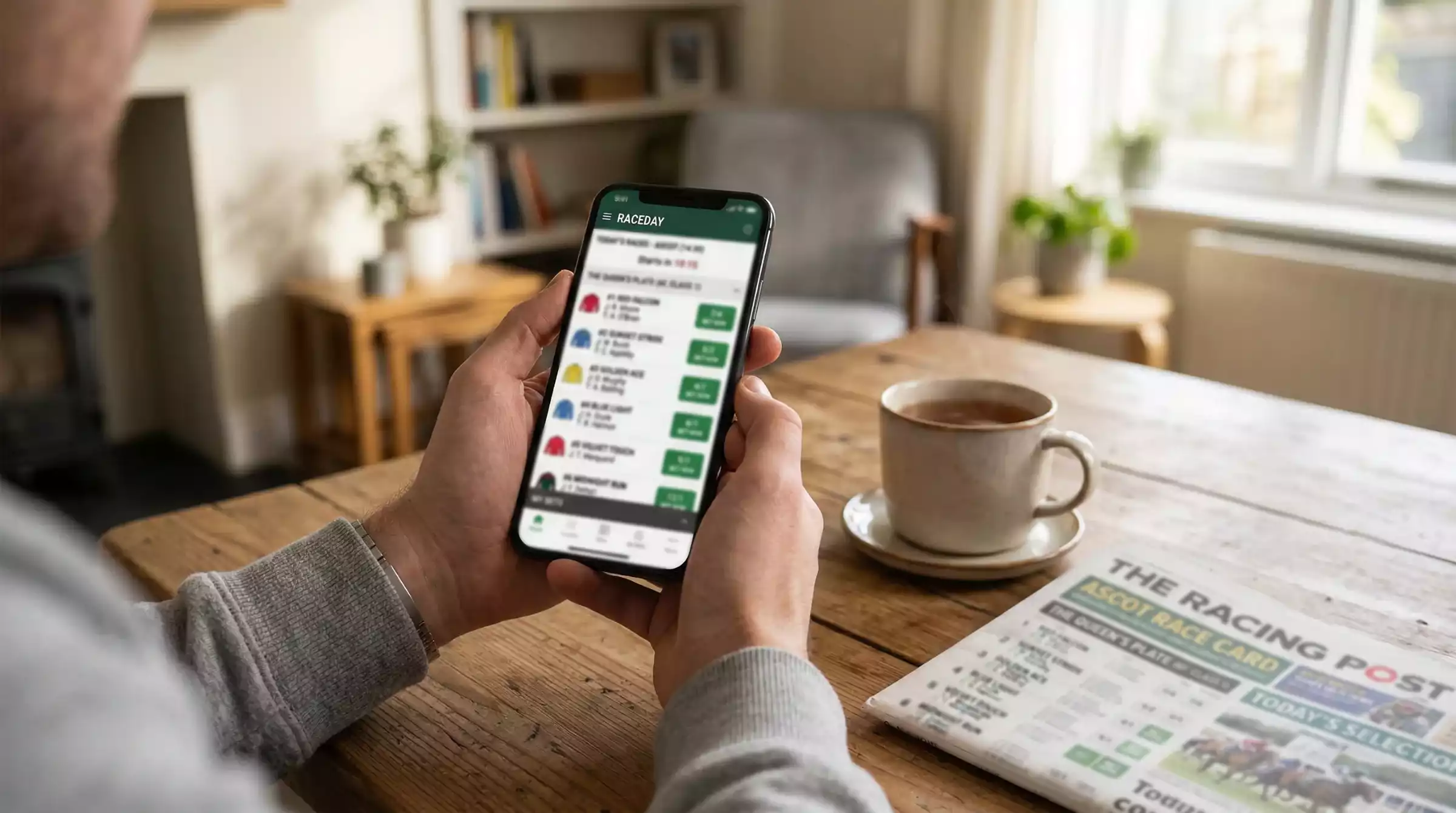
If you have never placed a bet online before, the process can look more complicated than it actually is. In practice, you can go from zero to confirmed bet in under ten minutes. Here is exactly how it works, broken down into stages that assume no prior experience.
Step 1: Choose a Licensed Bookmaker
Start by selecting a bookmaker that holds a licence from the UK Gambling Commission. Every legitimate operator displays its licence number in the footer of its website. The major names — Bet365, William Hill, Ladbrokes, Coral, Paddy Power, Betfair, Sky Bet — all hold UKGC licences and offer Grand National markets. Your choice will come down to personal preference: some offer better odds, others have more generous place terms or free bet promotions. We compare place terms in detail later in this guide.
Step 2: Create Your Account
Click the sign-up or register button on the bookmaker's site or app. You will need to provide your full name, date of birth, address, email and a phone number. UK law requires bookmakers to verify your identity before you can place a bet, so have a form of photo ID ready — a driving licence or passport. Most operators now run electronic verification checks, meaning you may not need to upload anything manually. If the automated check cannot confirm your identity, you will be prompted to submit a document.
Step 3: Deposit Funds
Once your account is verified, navigate to the deposit section. Most bookmakers accept debit cards (Visa, Mastercard), bank transfers, PayPal, Apple Pay, and various e-wallets. Credit card gambling has been banned in the UK since April 2020, so do not expect to see that option. Minimum deposits vary by operator but are typically between £5 and £10. Choose an amount you are comfortable losing — the Grand National is entertainment, not income.
Step 4: Find the Market and Select Your Horse
Bookmakers make the Grand National easy to find — look for "Aintree" or "Grand National" under the racing tab, or simply check the homepage during race week. Click on the odds next to the horse you want to back. This adds the selection to your bet slip. Choose your bet type — win only or each-way — enter your stake, and the slip will display your potential returns.
Step 5: Confirm and Wait
Review your bet slip carefully — check the horse name, the stake, the bet type and the odds. If your bookmaker offers Best Odds Guaranteed, a note will usually appear confirming this. Click "Place Bet" and you are done. Your bet is confirmed, and you will receive a confirmation on screen and typically via email.
At peak moments during the Grand National, Entain processes over 15,000 bets per minute across its platforms. The company prints more than 4 million betting slips for its retail network in the run-up to the race. If the site or app feels slow in the final minutes before the off, that is why.
Betting in a Shop
The process in a high-street betting shop is even simpler. Walk in, pick up a slip, write down the horse's name, your stake and bet type, and hand it to the cashier with your cash. No account, no verification, no app. You collect your winnings at the same counter after the race.
Grand National Bet Types: Win, Each-Way, Forecast and Beyond
The Grand National's large field and unpredictable nature make it fertile ground for a wider range of bet types than you might use on a five-runner novice hurdle. Understanding what is available — and which formats suit this particular race — is essential before you commit your stake.
Win Only
The simplest bet: you pick a horse and it must finish first. At odds of 10/1, a £5 win bet returns £55 (£50 profit plus your £5 stake). The appeal is a clean, undiluted payout. The drawback, in a race with 34 runners and a long history of upsets, is that even fancied horses finish second, third or fourth with painful regularity. Win-only betting on the Grand National is best reserved for short-priced selections where you believe the odds undervalue the horse's genuine chance, or for very small speculative stakes on outsiders.
Each-Way
This is the Grand National's signature bet. An each-way wager is two bets in one: a win bet and a place bet. If your horse wins, both parts pay out. If it places but does not win, only the place part pays — at a fraction of the full odds. For the Grand National, most bookmakers pay four, five or even six places, at 1/4 or 1/5 of the odds. A £5 each-way bet costs £10 total. If your horse is 20/1 and the bookmaker pays 1/4 odds for five places, a placed finish returns £30. Each-way betting is popular precisely because the generous place terms mean your horse does not need to win for you to collect.
Each-way (E/W) — a single wager comprising two equal-stake bets: one on the horse to win, one on the horse to place (finish in a specified number of top positions). The place part pays at a fraction of the win odds.
Straight Forecast
A forecast requires you to predict the first two finishers in the correct order. In a 34-runner handicap, payouts for unconsidered combinations can run into thousands of pounds from a modest stake. A reverse forecast covers both possible orders but costs twice the unit stake.
Tricast
Name the first three finishers in exact order. Tricast payouts on the Grand National are the stuff of betting legend — five-figure returns from a £1 stake when three outsiders fill the frame. Combination tricasts cover all six orderings of three selections, costing six times your unit stake, and are a popular way to play without needing the precise finishing order.
Ante-Post
Ante-post bets are placed before final declarations, sometimes months in advance. The advantage is better odds; the risk is that your horse may not run, and without a non-runner no bet guarantee, your stake is lost. The Grand National ante-post market opens in the autumn and remains active through the spring.
Non-runner no bet (NRNB) — a promotional term meaning your stake is refunded if the horse you have backed is withdrawn before the race. Standard ante-post bets do not include this protection unless explicitly stated.
Specials, Novelty Markets and Tote Pools
Bookmakers open a range of specials markets in the days before the Grand National: number of finishers, winning trainer nationality, winning distance and more. These offer a different route into the race if your analysis points to a trend rather than a specific horse. The Tote operates pool betting alongside fixed-odds markets, with products like the Placepot (picking a placed horse in each of the first six races) producing outsized returns when the winning pool is shared among few ticket holders.
For most first-time Grand National bettors, the decision comes down to win only or each-way. If you are staking £10 or less and want the broadest chance of a return, each-way is almost always the smarter choice.
Each-Way Calculator: Work Out Your Potential Returns
Each-way maths is not complicated, but it does involve two separate calculations — one for the win part and one for the place part — which can trip people up the first time. Here is the formula, followed by a worked example using realistic Grand National numbers.
Each-way payout formula
Win return = (odds x win stake) + win stake
Place return = ((odds x place fraction) x place stake) + place stake
Total return if horse wins = win return + place return
Total return if horse places (but does not win) = place return only
Example: £5 each-way on a horse at 20/1, bookmaker pays 1/4 odds for 5 places
Total stake: £10 (£5 win + £5 place)
If the horse wins: Win part = (20 x £5) + £5 = £105. Place part = ((20 x 0.25) x £5) + £5 = £30. Total return = £135. Profit = £125.
If the horse finishes 2nd–5th: Win part = £0. Place part = £30. Total return = £30. Profit = £20.
If the horse finishes 6th or worse: Both parts lose. Total return = £0. Loss = £10.
Notice how the place terms fundamentally change the risk profile. On a win-only bet at 20/1, you either collect £105 or lose your £5. On the each-way version, your downside is £10 (because you are placing two bets), but you have five chances to earn a return instead of one. For horses at longer odds — 33/1, 50/1 — the place portion alone can produce a tidy profit even without a win.
The key variable is the place fraction your bookmaker offers. At 1/4 odds, the place return is exactly a quarter of the win odds. At 1/5 odds, it drops to a fifth. On a horse at 20/1, the difference between 1/4 and 1/5 place terms is 5/1 versus 4/1 on the place part — which translates to £30 versus £25 back on a £5 place stake. Over the course of many bets, this gap adds up. Always check the terms before you confirm.
How Grand National Odds Work
Odds are the language of betting, and if you cannot read them, you are placing your money blind. The Grand National uses predominantly fractional odds in the UK — 10/1, 25/1, 7/2 — though decimal formats (11.00, 26.00, 4.50) are available on most sites and apps. Both express the same thing: how much you stand to win relative to your stake.
Fractional and Decimal Odds
Fractional odds tell you profit per unit staked. At 10/1, you win £10 for every £1 staked, plus your stake back. At 7/2, you win £7 for every £2. Odds-on prices like 4/6 mean you stake more than you stand to win — these are rare in the Grand National given the field size. Decimal odds express total return per £1 staked, including the stake: 10/1 fractional is 11.00 decimal. To convert, divide the first number by the second and add 1. Many exchange bettors prefer decimals because the arithmetic is cleaner when comparing multiple selections.
What the Odds Tell You
Odds are a reflection of probability — or at least the market's estimate of probability. A horse at 5/1 is considered, by the weight of money in the market, to have roughly a 16.7% chance of winning (1 ÷ 6 = 0.167). A horse at 33/1 is deemed to have about a 2.9% chance. These are not scientific measurements; they are the aggregated opinion of bookmakers, professional punters, and the general public. But they tend to be directionally accurate over large samples: favourites win more often than outsiders, and shorter-priced horses place more frequently than longshots.
The important nuance for Grand National betting is that these implied probabilities include a built-in margin — the overround. Add up every horse's implied chance and the total exceeds 100%, typically by 15–30%. That excess is the bookmaker's theoretical profit margin, and it is why finding value — horses whose genuine chance exceeds what the odds suggest — is the only sustainable betting approach.
Ante-Post Odds vs Starting Price
The Grand National ante-post market opens months before the race. If you back a horse at 40/1 in December and it shortens to 16/1 by race day, you keep the 40/1 price. The risk is that standard ante-post bets carry no refund if the horse is withdrawn. Starting Price (SP) is the official odds at the moment the race begins. Some bookmakers offer Best Odds Guaranteed (BOG), paying whichever is higher — your original price or the SP. In a volatile market like the Grand National, BOG can be valuable: back a horse at 20/1 on Friday evening, and if the SP drifts to 28/1, a BOG bookmaker pays you at 28/1.
Place Terms: How Many Places Will Bookmakers Pay?
Place terms are arguably the single most important variable in Grand National each-way betting, and they vary significantly between operators. A bookmaker paying six places at 1/4 odds offers a materially different product from one paying four places at 1/5 odds — yet both will happily advertise themselves as offering "great Grand National each-way terms." You need to read the detail.
How Place Terms Work
When a bookmaker offers each-way betting on the Grand National, they specify two things: the number of places they will pay (typically 4, 5, or 6 in a field of 34) and the fraction of the win odds they will pay for a placed finish (usually 1/4 or 1/5). More places and a higher fraction mean better value for the punter. Fewer places and a lower fraction mean the bookmaker retains more margin.
Standard vs Enhanced Place Terms
Standard industry terms for a handicap with more than 16 runners are 1/4 odds for the first four places. Most bookmakers start with this baseline but enhance their terms for the Grand National specifically, because competition for the once-a-year customer is fierce. Enhanced offers typically add one or two extra places, sometimes at a reduced fraction. It is not uncommon to see "six places at 1/5 odds" or "five places at 1/4 odds" from different operators on the same race.
| Place term offer | Places paid | Fraction of win odds | What it means at 20/1 on £5 E/W |
|---|---|---|---|
| Standard | 4 | 1/4 | Place return = £30 (5/1 x £5 + £5) |
| Enhanced A | 5 | 1/4 | Place return = £30, but one extra place to hit |
| Enhanced B | 6 | 1/5 | Place return = £25 (4/1 x £5 + £5), but two extra places |
| Enhanced C | 6 | 1/4 | Place return = £30, plus two extra places — the best deal |
The trade-off between more places and a lower fraction depends on the odds of your selection. For a horse at very long odds — say 50/1 — the difference between 1/4 and 1/5 place fractions is significant (12.5/1 vs 10/1 on the place part). The extra place or two may not fully compensate. For a horse at shorter odds — 8/1 or 10/1 — the extra places matter more, because a placed finish at any fraction still produces a decent return.
Always compare place terms across at least three bookmakers before placing your Grand National each-way bet. The difference between four places and six places, or between 1/4 and 1/5 odds, can be worth several pounds on a modest stake — and considerably more on larger ones.
Check when enhanced terms are available. Some bookmakers offer their best place terms only for early bets, while others maintain them until the off. A few reserve enhanced terms for new customers as a sign-up incentive. Read the detail and place your bet where the value is highest — not where the advertisement is loudest.
Grand National 2026 Runners, Odds and Key Contenders
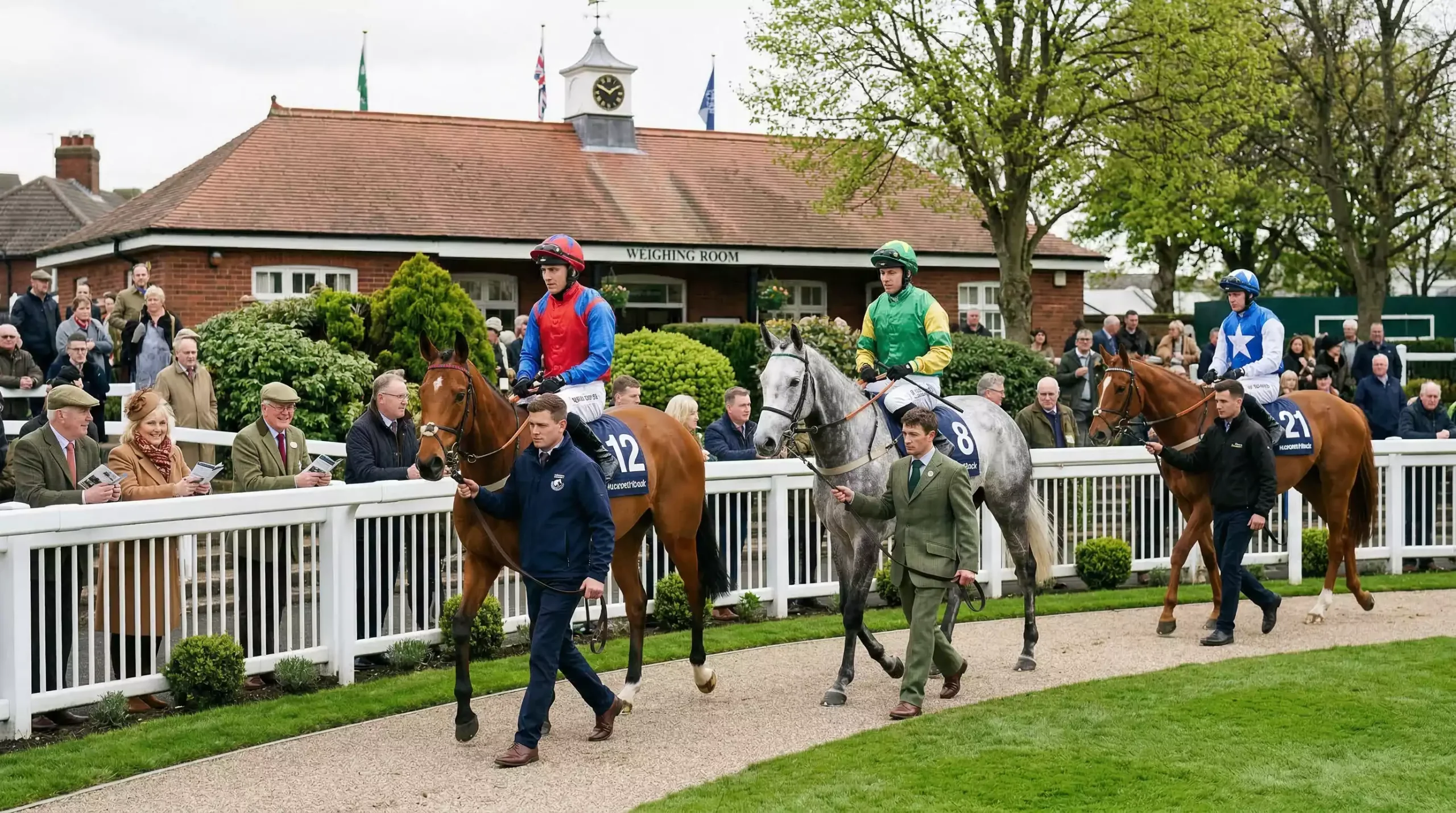
The Grand National field for 2026 will feature a maximum of 34 runners — reduced from the previous limit of 40 as part of the Jockey Club's ongoing welfare reforms. The smaller field means fewer fallers at the early fences, a slightly less congested first circuit, and — from a betting perspective — a fractionally higher probability for each individual runner. The total prize fund is expected to match or exceed the £1 million offered in 2025, with the winning owner collecting around £500,000.
As of spring 2026, the ante-post market is active and the early movers are beginning to separate themselves from the pack. Final declarations and weights will not be confirmed until closer to race week, but the horses attracting the most market support are those with proven stamina over extreme distances, solid records at Aintree or over similar National Hunt fences, and the backing of trainers with strong Grand National pedigrees.
Horses at the Head of the Market
The market leaders typically include runners from the yards of Willie Mullins, Gordon Elliott, Lucinda Russell and other trainers with deep Grand National experience. Horses that performed well at the Cheltenham Festival in March 2026, particularly over three miles or more, will attract significant support. The Irish-trained contingent deserves special attention: Mullins, Elliott, Henry de Bromhead and Gavin Cromwell are all likely to field runners, and the strength of Irish National Hunt racing has made cross-channel raiders the dominant force at Aintree over the past decade. In any given year, a third to a half of the Grand National field may travel from Ireland, and the market frequently underestimates the depth of talent crossing the Irish Sea.
The Outsiders and Dark Horses
If the 2025 running taught us anything, it is that outsiders win the Grand National with startling regularity. Nick Rockett went off at 33/1, ridden by amateur jockey Patrick Mullins, and led home a remarkable one-two-three for the Willie Mullins stable, with five of the first seven finishers trained at Closutton — a performance without modern precedent. Dark horses in 2026 will likely come from two categories: lightly raced novice chasers with scope for improvement, and older hands who have placed in the race before without winning.
Key Factors to Monitor Before Race Day
The ante-post market will shift considerably between now and race day. Late withdrawals, ground conditions, weight allocations and the results of spring trials will all reshape the betting. If a strongly fancied horse is withdrawn, the field's complexion changes and previously overlooked runners come into play. Non-runner no bet offers provide insurance against this scenario. As declarations are confirmed and the race edges closer, we will see the market narrow — and the real value opportunities will emerge for those paying attention.
Grand National Betting Tips for 2026

There is no formula that guarantees a profit on the Grand National. If there were, the bookmakers would have stopped offering the market long ago. What there is, however, is a set of data-driven principles that consistently separate informed bettors from those relying on guesswork — and in a race where the majority of punters pick their horse by name, a little analysis goes a long way.
Use the Completion Rate as Your Starting Filter
Not every horse that lines up for the Grand National will finish. In the 2024 running, 21 of 32 starters completed the course — a solid completion rate by National standards, aided by the reduced field size and fence modifications. The ability to get round Aintree safely is a genuine skill, and it should be the first thing you check. Horses that have completed the course before, or that have a strong record over National-style fences (Haydock's Grand National Trial, Warwick's Classic Chase), deserve priority. There is no point having the best form horse in the race if it refuses at Becher's Brook.
Weight and Age: What the Trends Say
Grand National winners tend to carry between 10st 0lb and 11st 5lb, with a sweet spot around the lower end of that range. Very few horses carrying the topweight have won the race in the modern era — the combination of extreme distance and big fences punishes those conceding weight to the rest of the field. Age is similarly instructive: the most successful cohort is horses aged 8 to 10, old enough to have the experience but young enough to retain the stamina. Horses outside that band can still win (and have), but the frequency drops noticeably.
Trainer and Jockey Records Matter
The Grand National rewards specialisation. Trainers who target Aintree as a season goal, rather than treating the race as a consolation for horses that underperformed at Cheltenham, tend to do disproportionately well. Nick Rockett's victory in 2025 at 33/1 was the latest demonstration: trained by Willie Mullins, the horse was part of a carefully managed assault on the race that produced five of the first seven finishers, including a clean sweep of the first three places. That level of dominance from a single yard was unprecedented and underlines the importance of checking the trainer's record before you bet.
Jockey selection is equally relevant. Riders who know the Aintree fences — where to sit, where to take a pull, where to give a horse daylight — have a tangible advantage. The Grand National favours patient riding and intelligent positioning over raw speed, which is why experienced National riders outperform their strike rates elsewhere.
"Watched by hundreds of millions of people worldwide, the Grand National's popularity and ability to capture the attention of casual bettors remains undisputed, according to our global sportsbook," noted Greg Ferris, Managing Director of Sports at Entain. That casual interest creates pricing inefficiencies for analytical bettors. If a third of the market is picking horses by name, the form-based selections are, by definition, underbet relative to their genuine chances.
Ground Conditions at Aintree
The going at Aintree in April is typically good to soft or soft. Horses with proven form on the prevailing ground have a significant edge. Check the going report in the week before the race and cross-reference against your selections' preferred surface. A horse whose best runs have come on heavy ground may struggle if Aintree is riding good to firm.
The Value Mindset
Value betting means backing horses whose genuine chance of winning or placing exceeds what the odds imply. A horse at 25/1 whose true probability is closer to 6% (roughly 15/1) represents genuine value. You will not find these discrepancies by reading headlines; you find them by comparing your own assessment of each horse's chance against the market price. It requires effort and being wrong more often than right, but over time, it is the only strategy that puts the odds on your side.
The Aintree Course: Fences, Distance and What Makes It Unique

The Grand National is run over four miles and two-and-a-half furlongs, making it the longest race in the mainstream British racing calendar. The course comprises two circuits of the National track at Aintree, with 16 fences on the first circuit and 14 on the second (the final two fences on the first lap are bypassed on the second). In total, runners jump 30 fences before a long run-in of 494 yards to the finishing post — long enough for fortunes to change dramatically in the closing stages.
What sets Aintree apart from every other British racecourse is not just the distance but the fences themselves. National fences are built with spruce, not the conventional birch used elsewhere, and they are wider, stiffer, and more upright than standard steeplechase obstacles. Horses cannot brush through the top of these fences the way they might at Cheltenham or Newbury. They must jump them properly, which places a premium on accurate jumping and bold, athletic technique.
The Iconic Obstacles
Three fences define the Grand National in the public imagination. Becher's Brook (fence 6 on the first circuit, fence 22 on the second) features a notable drop on the landing side, requiring horses to adjust their balance mid-air. The fence was modified in 2013 and further adjusted in recent years, but it remains the most photographed and discussed obstacle on the course. As part of the 2024 safety reforms, the first fence — not Becher's — was repositioned 60 yards closer to the start, reducing the speed of the field in the opening stages of the race.
The Chair (fence 15, jumped once only) is the tallest fence on the course at 5 feet 2 inches, preceded by a 6-foot open ditch. It stands directly in front of the main grandstand, and the noise of the crowd combined with the sheer scale of the obstacle makes it one of the most demanding tests in British racing. Canal Turn (fence 8 and fence 24) requires a sharp left-hand turn immediately after landing, rewarding jockeys who position their horses on the inside approaching the fence and punishing those caught wide.
What This Means for Betting
The course design directly affects betting strategy. Horses with a proven record over National fences — either in the Grand National itself, the Topham Chase (run over the same fences at the Aintree Festival), or the Becher Chase in December — have demonstrated they can handle the unique demands. First-time runners at Aintree are an unknown quantity, and the market sometimes prices them more generously than their ability warrants, simply because there is no course form to anchor the assessment.
The three-day Aintree Festival that hosts the Grand National draws around 150,000 spectators across Thursday, Friday and Saturday. British racecourse attendance as a whole reached 5.031 million in 2025 — the first time the figure exceeded 5 million since 2019, representing a 4.8% increase on the previous year. Grand National day itself accounts for a disproportionate share of that figure, reinforcing the race's status as the centrepiece of the British National Hunt season.
Betting Safely: Responsible Gambling on the Grand National
The Grand National is an event designed to be enjoyed, and for the overwhelming majority of the millions who place a bet, it is exactly that: a few pounds staked for an afternoon's entertainment. But the sheer scale of participation — and the fact that many bettors are placing their first or only wager of the year — makes it worth pausing to talk about responsible gambling.
The first principle is straightforward: only bet what you can afford to lose. This is not a platitude. The Grand National is a 34-runner handicap over the most demanding fences in British racing. The favourite wins roughly one in five years. Your horse will probably not win. If the money you are staking would cause you financial stress if lost, you should not be staking it. Set a budget before Grand National day, stick to it, and treat any return as a bonus rather than an expectation.
The Black Market Problem
There is a less visible dimension to responsible gambling that has gained urgency in recent years: the growth of unlicensed betting operators targeting British punters. According to the IFHA's research, unique visitor numbers to 22 unlicensed bookmaker websites offering British horse racing grew by 522% between August 2021 and September 2024. Over the same period, legitimate licensed sites grew by just 49%. This is not a marginal issue. The Betting and Gaming Council estimated that £9.4 million of the £250 million wagered on the 2025 Grand National was placed through illegal operators.
"Almost £10 million will be staked illegally on the unsafe, growing gambling black market at this year's Grand National, fuelling crime, undermining player protection measures, while sucking vital cash from sport and the Treasury," said Gráinne Hurst, CEO of the BGC. The implications for individual punters are concrete: unlicensed operators offer no deposit protection, no dispute resolution, no self-exclusion tools, and no obligation to pay out. If something goes wrong, you have no recourse.
A BHA survey found that one in ten horse racing bettors had already used unlicensed operators. The reasons vary — some are drawn by fewer identity checks, others by the absence of affordability limits — but the risks are uniformly high. Always verify that your bookmaker holds a UK Gambling Commission licence before depositing. You can check any operator's licence status on the UKGC website.
Tools to Keep You in Control
Every UKGC-licensed bookmaker offers responsible gambling tools: deposit limits, loss limits, session time reminders, cooling-off periods, and self-exclusion. GamStop, the national self-exclusion scheme, blocks you from all licensed online gambling operators for a minimum of six months. GambleAware provides free, confidential advice for anyone concerned about their gambling.
The Grand National should be the most fun you have with a fiver all year. If it stops being fun, those tools exist for you. Use them.
Frequently Asked Questions About Betting on the Grand National
What is an each-way bet and why is it popular for the Grand National?
An each-way bet is two bets in one: a win bet and a place bet, at equal stakes. If your horse wins, both parts pay out. If it finishes in a specified place position without winning, only the place part pays — at a fraction of the full odds, typically 1/4 or 1/5. For the Grand National, each-way betting is popular because the large field of 34 runners means bookmakers offer extended place terms, often paying out on five or six places. With 82% of Grand National bets being £5 or less, each-way gives casual punters a realistic possibility of a return even when their horse does not win. The nation's punt has always been an each-way affair.
How many places are bookmakers paying on the Grand National 2026?
Place terms vary by bookmaker and can change in the run-up to the race, so checking closer to the event is essential. Standard terms for the Grand National are four places at 1/4 odds, but most major operators enhance them for this race to attract once-a-year customers. Enhanced offers typically range from five places at 1/4 odds to six places at 1/5 odds, with the most generous operators occasionally offering six places at 1/4 odds. Compare at least three bookmakers before placing your each-way bet for 2026. The difference between four and six places can mean the difference between losing your stake and collecting a return.
How do I place a bet on the Grand National online — step by step?
Choose a bookmaker licensed by the UK Gambling Commission — look for the licence number in the site's footer. Register with your name, date of birth and address, and verify your identity (most operators run automated checks). Deposit funds using a debit card, bank transfer or e-wallet — credit cards cannot be used for UK gambling. Navigate to the Grand National market under the horse racing section, click the odds next to your chosen horse, select win only or each-way in the bet slip, enter your stake, review the details, and confirm. The process takes under ten minutes. If you prefer betting in person, visit any high-street betting shop, fill in a paper slip and hand it to the cashier with your money.
