Grand National 2026 Date, Time and Aintree Festival Schedule
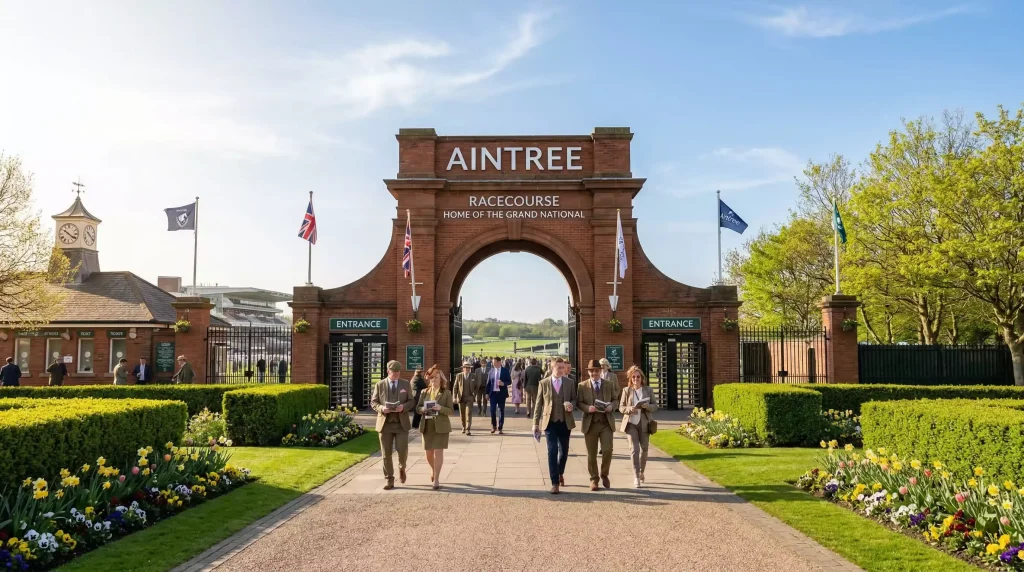
Every April, Aintree Racecourse turns into the centre of the British sporting calendar for three packed days. The festival draws around 150,000 racegoers across the meeting, with the Grand National itself serving as the crescendo on Saturday afternoon. Getting the dates and times right matters — not just for booking travel or securing a table at the pub, but for placing your bets at the right moment. Ante-post markets shift quickly in the final days, and knowing when declarations are confirmed, when the race card is finalised and when the off actually is can make a real difference to your betting plan.
This guide lays out the full schedule for the 2026 Aintree Festival, from the opening race on Thursday through to the last stride of the Grand National on Saturday. Mark your calendar, set your alarms, and get ready.
Grand National Race Day 2026: Hour-by-Hour Timeline
Grand National Saturday is a full day of racing, not just a single event. The card typically features six or seven races before the big one, starting in the early afternoon and building steadily towards the headline act. Here is what a typical Grand National Saturday looks like, based on the established patterns from recent years.
Gates at Aintree usually open around 10:30 BST. For those attending in person, this is when the atmosphere starts to build — the betting ring fills up, the Tote windows open, and the first queues form at the Champagne bars. If you are betting from home, the morning is a good time to review the final declarations, check for any late withdrawals and lock in any last-minute ante-post prices before the non-runner announcements narrow the field.
The first race on the card generally goes off at around 12:45 BST — earlier than in recent years, following a restructuring of the race-day schedule for 2026. These undercard races are quality contests in their own right — many are Grade 1 or listed events — and they set the tone for the afternoon. Punters who bet across the full card often find value in these earlier races, where attention from the casual audience is lower and the markets can be less efficient.
Through the afternoon, races follow at roughly 35-minute intervals. ITV’s television coverage usually begins at around 14:00, picking up the action from the second or third race and expanding into the full build-up to the National. By mid-afternoon, the paddock is packed, the parade ring is buzzing, and the betting ring prices are moving rapidly as the market sharpens.
The key window is the final 90 minutes before the Grand National. This is when the jockeys weigh out, the runners parade, and the market undergoes its last major shifts. If you have been waiting for starting price rather than taking an early number, this is your moment. The atmosphere — whether you are at the course or watching from home — ramps up in a way that very few sporting events can match.
After the Grand National, there is typically one more race on the card, followed by the presentation ceremony and the long, happy (or commiserative) walk back to the car park. For home viewers, post-race coverage on ITV includes replays, jockey reactions and the post-mortem analysis that fuels arguments in pubs until the following April.
Key Times: When Does the Grand National Start in 2026?
The Grand National traditionally starts at approximately 16:00 BST (4pm) on the Saturday of the Aintree Festival. This time slot was established from 2026 onwards, when the Jockey Club moved the start from the previous 17:15 slot to reduce the build-up time and improve ground conditions. The exact off time can vary by a few minutes — sometimes the start is delayed if there are issues at the starting tape or if a horse needs to be resaddled. The race organisers publish the official time in the week before the event, so it is always worth confirming closer to the day.
For bettors, the more important times are the declaration stages. Final declarations for the 2026 Grand National are confirmed on the Wednesday of race week — a shift from the traditional 48-hour window to a new 72-hour declaration process introduced for 2026. This is when the field is officially set and any non-runners are announced. This is a significant moment for anyone holding ante-post bets: if your horse is declared a non-runner and you did not take non-runner no bet terms, you lose your stake. Equally, the declaration stage is when the final handicap weights are confirmed, which can trigger a flurry of market activity.
The prize fund for the 2026 race is expected to match or exceed the £1 million offered in 2026, with the winner taking home £500,000. That purse underlines the scale of what is at stake — not only for owners and trainers, but for the betting market that surrounds the race. When the prize money is this significant, it attracts the strongest possible field, which in turn drives the depth and liquidity of the betting market.
One practical tip: if you are planning to place a bet in the final minutes before the off, be aware that bookmaker websites and apps can slow down under the sheer weight of traffic. The last 15 minutes before a Grand National start are some of the busiest moments in the entire betting calendar. If your bet matters to you, do not leave it to the final seconds.
The Full Aintree Festival 2026: Thursday, Friday and Saturday
The Aintree Grand National Festival is a three-day meeting, and while Saturday’s Grand National takes the headlines, each day has its own character and its own quality racing.
Thursday — Opening Day. The festival kicks off with a strong card of races that typically includes a couple of Grade 1 contests. Thursday draws a serious racing crowd — fewer casual visitors, more committed form students. For bettors, this is often the day when the each-way value is most generous, because the wider public has not yet descended on the markets. Thursday also provides an early look at how the ground is riding, which feeds into late adjustments for Saturday’s Grand National selections.
Friday — Ladies Day. The most glamorous day of the festival, and usually the busiest at the course. The racing card includes the Melling Chase and the Sefton Novices’ Hurdle, both of which attract top-quality fields. The atmosphere is electric — fashion competitions, champagne, and a betting ring that throbs with activity. For punters focused on the Grand National, Friday is also when the final ante-post market starts to crystallise. Any significant support for a horse on Friday often reflects late inside information or a trainer expressing confidence at the course.
Saturday — Grand National Day. The main event. The undercard features strong races throughout the afternoon, building towards the Grand National at around 16:00 BST. If you are attending in person, expect the atmosphere to build steadily from early afternoon. If you are watching from home, ITV coverage typically begins at 14:00 and runs through to the post-race analysis. Everything on this day revolves around one question: which horse is going to cross the line first over those four miles and two furlongs?
Across the three days, the festival offers a complete racing experience — from the tactical opening day to the theatrical pageant of Ladies Day to the crescendo of the National itself. Whether you are at the course or following from a distance, mark your calendar for the full meeting. The Grand National is the destination, but the journey through Thursday and Friday is well worth the ride.