Grand National Minimum Bet: How Little Can You Stake in 2026?
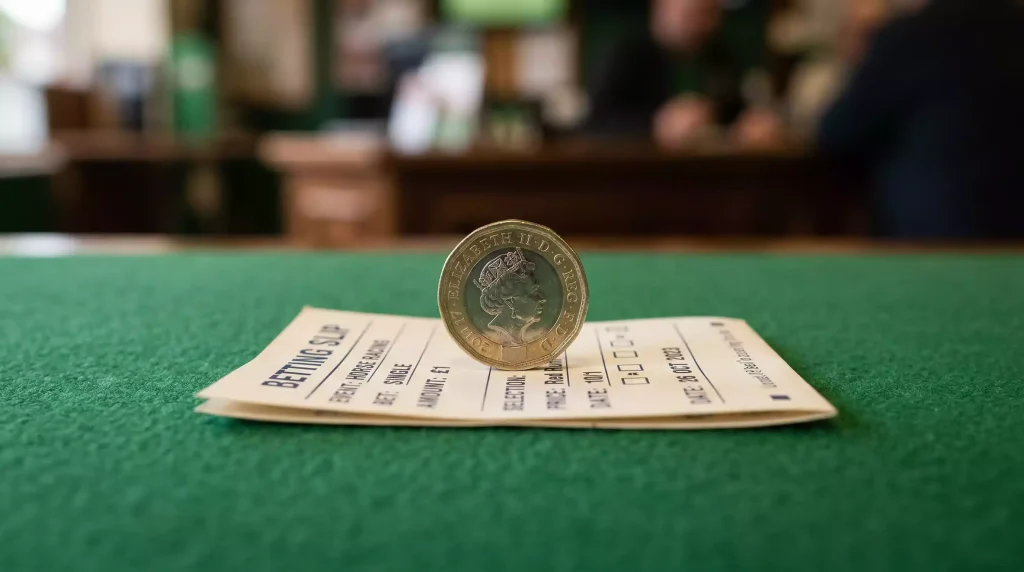
There is a persistent myth that betting on the Grand National requires serious money. It does not. The race is the biggest betting event in the UK calendar, and the vast majority of the people who take part are staking small amounts — a few pounds, often less. Data from Entain’s 2026 Grand National showed that 82% of in-shop bets were for £5 or less, with fewer than one in a hundred exceeding £20. The Grand National is, overwhelmingly, a low-stakes event — and every pound counts.
If you are wondering how little you can put on, the answer is: not much at all. This guide covers the minimum stake rules at major UK bookmakers, strategies for making the most of a small bet, and a practical comparison of who lets you stake what.
Minimum Stake Rules: What Each Major Bookmaker Allows
Minimum stakes vary between bookmakers, between channels (online versus in-shop) and sometimes between bet types. The general picture, though, is encouraging for small-stakes punters.
Most major online bookmakers — Bet365, William Hill, Paddy Power, Coral, Ladbrokes, Betfair Sportsbook — set their minimum stake at somewhere between 1p and 10p for online bets. Yes, you can literally bet a penny on the Grand National with some operators, though the return on a 1p each-way bet at 20/1 is not going to change your life. In practice, the most common small bet on the Grand National is £1 or £2 each way — small enough to feel disposable, large enough to produce a meaningful return if your horse places.
In betting shops, the minimum stake is typically higher — usually £0.05 (5p) or £0.10 (10p), though some shops set a practical floor of £0.50 or £1 because of the cost of processing the slip. If you walk into a Ladbrokes or a William Hill on Grand National morning and ask to put 50p each way on a 25/1 shot, nobody will bat an eyelid. It is exactly the kind of bet that millions of people place every April.
As Gráinne Hurst, Chief Executive of the Betting and Gaming Council, has described it, the Grand National is “one of the precious few sporting events in this country with the ability to unite the entire nation around a single spectacle. It is the nation’s punt.” That phrase — the nation’s punt — captures the democratising quality of the race. You do not need deep pockets to participate. A pound each way is enough to give you a horse, a rooting interest, and a reason to watch every fence.
There are some exceptions to the low-minimum trend. Certain bet types — forecasts, tricasts, accumulators — may carry slightly higher minimums at some operators. Tote pool bets usually have a minimum unit stake of £1 or £2, depending on the pool. And on betting exchanges, minimum bet sizes are typically set at £2, though the exact figure depends on the exchange. If you are planning a specific bet type, it is worth checking the bookmaker’s terms before race day to avoid any surprises at the bet slip.
Making the Most of a Small Grand National Stake
A small stake does not mean a small return. The Grand National’s large field and long-priced runners mean that even modest bets can produce significant payouts if the right horse obliges.
The most obvious strategy for small-stakes punters is the each-way bet. A £2 each-way bet (total outlay: £4) on a horse at 25/1 with four places at 1/4 odds returns £50 profit on the win part and £12.50 profit on the place part if the horse wins — a total of £66.50 from a £4 outlay. If the horse places but does not win, you still collect £12.50 on the place part, which covers your £4 stake three times over. Each-way is the format that gives small stakes the widest safety net.
Another approach is the accumulator or multiple bet. Combining two or three selections across the Aintree card — not just the Grand National — into a small-stakes accumulator can produce outsized returns if they all win. The risk is higher (all selections must win), but the potential reward from a £1 treble can comfortably run into three figures. Around 13 million people have some kind of flutter on Grand National day, and for many of them, a small-stakes multiple across the card is the way to stretch the fun across the full afternoon.
Tote pool bets are another option for small-stakes punters. A £2 Placepot — picking a horse to place in each of the first six races on the Grand National card — can return hundreds or even thousands of pounds if all six selections land. The dividend depends on the pool size and the number of winning tickets, so there is an element of lottery-style excitement to it. The Placepot has become a Grand National day staple precisely because it offers big returns from a small entry.
One more tip for small-stakes bettors: shop around for Best Odds Guaranteed. Several bookmakers offer BOG on the Grand National, which means if the starting price is higher than the price you took, you get paid at the better number. On a small stake, the difference might only be a few extra pounds — but when your total outlay is £4 or £5, even a small uplift represents a meaningful percentage improvement on your return. Small stakes and smart shopping go hand in hand.
Bookmaker-by-Bookmaker Minimum Bet Comparison
While specific minimums can change at any time, the following is a general guide to what the major UK-licensed bookmakers allow as of early 2026.
Bet365: Minimum online stake typically from 10p on singles, varying by bet type. In-shop minimums depend on the shop but are usually no higher than 5p. Each-way bets are accepted at the same minimums as singles.
William Hill: Online minimum from 1p on some markets, though most practical minimums sit around 10p. In-shop minimum varies but is commonly 5p to 10p. Tote bets from £2.
Paddy Power: Online minimum from 10p. Known for accepting small-stakes bets without restriction. In-shop minimums similar to the industry standard.
Ladbrokes and Coral: Both part of the Entain group. Online minimums from around 5p to 10p. In-shop minimums typically 5p or 10p. Tote bets from £2.
Betfair Sportsbook: Online minimum from 10p on most markets. The Betfair Exchange has a separate minimum of around £2 per bet.
Sky Bet: Online minimum from 5p. Does not operate physical shops.
One point worth noting: minimum bets on betting exchanges are typically higher than on sportsbooks. Betfair Exchange, for instance, sets a minimum around £2 per bet. If you are working with a very small bankroll, a traditional bookmaker sportsbook is likely a better fit than an exchange for your Grand National wager. The sportsbook will accept a £1 each-way bet without issue, whereas the exchange requires a larger minimum and an understanding of lay liability that goes beyond what a casual punt demands.
The bottom line: there is no practical barrier to placing a small bet on the Grand National. Whether you want to put £1, £2 or £5 on a horse that caught your eye in the parade ring, the bookmakers will take your money with a smile. The Grand National was built for exactly this kind of punt — a small stake, a big dream, and four miles of fences between you and a payout that makes the whole thing worthwhile. Every pound counts, and every punter matters.