
Grand National 2026 Runners and Odds: Entries, Contenders and Market Guide
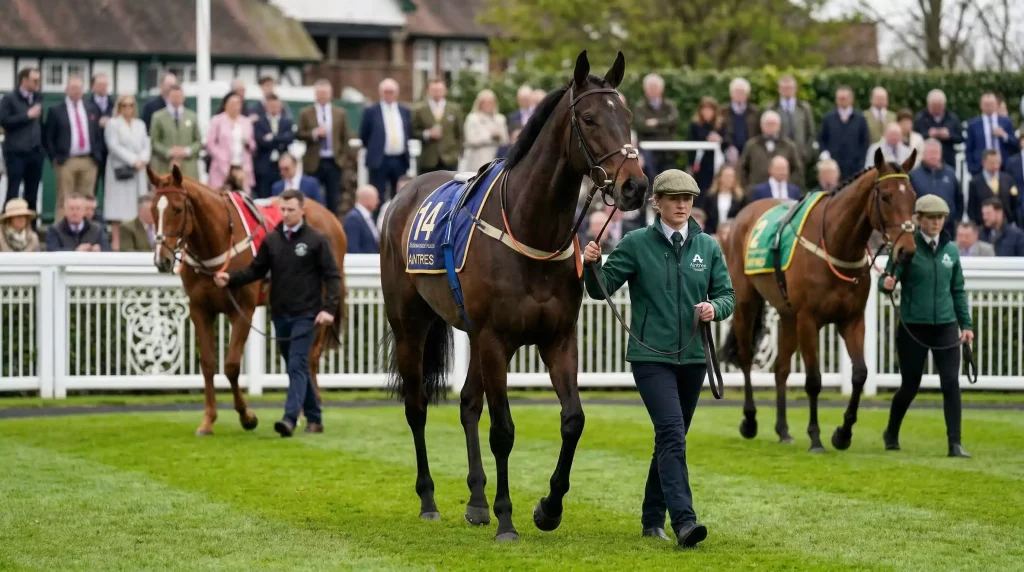
The Grand National 2026 is shaping up to be one of the most compelling renewals in recent memory. With a prize fund of £1 million and the reigning champion Nick Rockett’s connections weighing up a return to Aintree, the ante-post market has been active since the autumn — and it is already telling a story about who the market fancies and who it is choosing to ignore.
This guide covers the confirmed entries and weights, the current shape of the ante-post market, profiles of the leading contenders, dark horses worth a second look, the Irish contingent that has dominated recent renewals, and the late-stage changes that can reshape the field in the final days before the race. It will be updated as declarations are confirmed and the market moves, so treat it as a living document rather than a snapshot.
A word of caution before we start: the Grand National field is not finalised until the five-day declaration stage, and horses can be withdrawn right up to the morning of the race. Ante-post odds on runners profiled below may change substantially — or the horses may not run at all. Every assessment here is based on available information at the time of writing, and the smart punter checks for updates before placing a bet.
Grand National 2026 Confirmed Entries and Weights
The Grand National entry process unfolds in stages. The initial entries — typically numbering around 100 or more — are made in January, when trainers pay a relatively modest entry fee to keep their options open. The field is then whittled down through a series of forfeit stages in February and March, until the final declarations are made five days before the race. Only 34 runners can line up at the start, with a handful of reserves in case of late withdrawals.
The 34-Runner Limit
Since 2026, the maximum field for the Grand National has been capped at 34 runners, reduced from the previous limit of 40. The decision, made by the Jockey Club in consultation with the BHA, was part of a broader package of safety reforms that also included repositioning several fences — most notably Becher’s Brook, which was moved 60 yards closer to the start to reduce the speed of approach on the first circuit. The smaller field reduces congestion at the early fences and gives each horse more room to jump, which has been reflected in improved completion rates in the races since the change.
For bettors, the reduced field has a direct impact on the market. Fewer runners mean a more concentrated field, which in theory makes the race slightly more predictable — though “slightly more predictable” in Grand National terms still means one of the most open handicaps in the calendar. It also affects each-way terms, since bookmakers calibrate the number of places they pay partly based on the size of the field.
How Weights Are Allocated
The BHA handicapper allocates weights based on each horse’s official rating, with the topweight carrying up to 11 stone 10 pounds and the bottom weight as low as 10 stone. The weights are published with the initial entries in January, but they are effectively finalised at the final forfeit stage when the runners are confirmed. Horses that run well in the interim — for example, winning a major trial at Cheltenham or Haydock — may see their handicap mark raised, which can push them up the weights or even out of the race if they are at the top of the handicap.
The weights table will be published in full closer to the final declarations stage. For now, the key trends to watch are which horses sit in the handicap’s sweet spot (around 10 stone 5 pounds to 11 stone) and which trainers have entered multiple horses at different weight levels — a strategy that, as the 2026 result showed, can pay spectacularly well.
Key Dates for 2026
The initial entries are published in January, with forfeit stages in February and March. Final declarations are made five days before the race, with the race itself scheduled for the first Saturday in April. Exact dates for 2026 will be confirmed by the Jockey Club and published on the Aintree website. Mark the declaration day in your calendar — that is when the field is confirmed and the serious market analysis can begin.
The Ante-Post Market: How Grand National Odds Are Shaping Up
The ante-post market for the Grand National opens months before the race and evolves continuously as trial results come in, entries are confirmed, and money flows into the market. Reading the ante-post prices is an imperfect science — horses are withdrawn, form changes, and the going on race day is unknowable in January — but the market’s shape tells you what the collective wisdom of punters and traders currently believes about the race.
The Scale of the Market
The Grand National attracts a volume of betting that dwarfs every other horse race on earth. Entain’s global sportsbook data showed that the Grand National generated 700% more bets than the Cheltenham Gold Cup in 2026 — a staggering differential that reflects the race’s unique appeal to both regular punters and once-a-year bettors. That volume creates a deep, liquid market where price movements carry more information than in smaller races. When a horse shortens from 25/1 to 16/1 in a market this large, it takes a significant weight of money to move the price, which means the move is rarely accidental.
“Watched by hundreds of millions of people worldwide, the Grand National’s popularity and ability to capture the attention of casual bettors remains undisputed,” noted Greg Ferris, Managing Director of Sports at Entain. That popularity translates directly into market depth: the more people betting, the more the odds reflect a genuine consensus rather than the opinion of a handful of sharp punters.
What the Early Market Looks Like
In the autumn and winter months, the ante-post market is wide and tentative. Prices of 20/1 and upwards are the norm for most of the field, with only the most obvious contenders trading below that level. As the season progresses and horses run in key trials — the Becher Chase at Aintree in December, the Welsh Grand National at Chepstow, the Midlands National at Uttoxeter, and the cross-country races at Cheltenham — the market begins to sharpen. Horses that win or run well in these trials see their Grand National odds shorten; horses that disappoint or pick up injuries drift outwards.
By March, the market has taken a recognisable shape. There is usually a group of four to six horses at the head of the betting, trading between 8/1 and 16/1, followed by a broad middle band of runners between 16/1 and 33/1, and a long tail of outsiders at 40/1 and beyond. The challenge for the punter is deciding whether the market’s assessment is correct or whether it has under- or over-estimated specific horses.
When the Market Moves Sharpest
The biggest ante-post market moves typically occur at three points: immediately after a significant trial result (a win in the Welsh National, for example, can halve a horse’s Grand National price overnight), at the final forfeit stage when the field is narrowed, and on the morning of the race when the going is confirmed and late money floods in. For ante-post punters, the first of those windows is often the best — it is the moment when you can catch a price that the wider market has not yet adjusted to.
Top Contenders: Profiles of the Market Leaders
The horses at the top of the ante-post market are there for a reason — they combine form, fitness, and the right profile for Aintree’s unique demands. What follows is a set of profiles based on the runners attracting the most market interest at the time of writing. These will be updated as the season progresses and trial form becomes available.
The Reigning Champion Question
Nick Rockett’s 2026 victory under Patrick Mullins was one of the most remarkable Grand National results in recent years, and the question of whether the horse returns to defend his title is the single biggest variable in the 2026 market. History is mixed on repeat winners — Tiger Roll managed it in 2018 and 2019, but most Grand National winners do not come back the following year, and those that do often carry significantly more weight. If Nick Rockett is confirmed as a runner, expect his price to sit between 10/1 and 16/1, reflecting both his proven ability over the course and the weight burden that comes with a winning handicap mark being reassessed.
The Mullins Battalion
Willie Mullins’ dominance in the 2026 Grand National — five of the first seven finishers — means his entire string of entries commands market attention. The Irish champion trainer is expected to enter multiple runners again in 2026, and any horse carrying the Mullins name will carry a premium in the market. The challenge for punters is identifying which of his entries is the stable’s primary hope and which are there to make up the numbers. Watching where the Mullins money goes in the early ante-post market is one of the most reliable guides.
Established Aintree Performers
Horses that have run well over the Grand National fences before — whether in the National itself, the Topham Trophy, or the Becher Chase — carry an inherent advantage that the market sometimes underprices. The ones to watch in 2026 are those that ran creditable races in the 2026 National without winning: horses that finished in the frame, completed the course comfortably, and are likely to return with a similar or improved handicap mark. These are the runners with known course form, proven stamina, and the temperament to handle Aintree’s demands — in short, the safest profiles in an unsafe race.
Fresh Faces From the Trials
Every Grand National features a handful of horses stepping up to the race for the first time, having qualified through impressive performances in the season’s major trials. These are harder to assess because they lack Aintree course form, but the ones to take seriously are those that have won or placed over three miles or further at a competitive level, jumped cleanly in testing conditions, and come from a yard with experience of preparing runners for the National. The trial results between December and March will identify these horses; until then, their ante-post prices are speculative and often represent the best value in the market if you can identify the right ones early.
Dark Horses: Outsiders Worth a Second Look
The Grand National loves an outsider. The race’s history is peppered with longshot winners who were dismissed by the market and rewarded by the course, and 2026 was a perfect reminder. Nick Rockett, at 33/1, was far from the shortest-priced horse in the field — and yet he won going away under an amateur jockey. The race’s extreme distance, its unique fences, and its sheer attrition rate combine to create an environment where class can be neutralised by luck, stamina, and good jumping.
Identifying dark horses this early in the season is part art, part science, and part guesswork. But there are patterns worth following.
The Profile of a Grand National Dark Horse
The runners that spring surprises at Aintree tend to share a few characteristics. They are often lightly raced over fences, meaning the handicapper has less data to work with and may have given them a lenient mark. They typically have strong stamina in their pedigree — a sire or dam-sire associated with staying power. They may have been off the radar for a period — perhaps returning from injury or switching trainer — which keeps them out of the tipsters’ columns and off the public’s radar. And they frequently come from yards that know how to prepare a horse specifically for the National, rather than treating it as an afterthought.
Where to Look
The handicap’s lower reaches — horses carrying between 10 stone and 10 stone 7 pounds — are the most fertile ground for dark horses. These runners have lower official ratings, which often means lower public profiles, but the reduced weight gives them a measurable advantage over the final mile when the topweights are feeling every ounce. Cross-reference this group with Aintree form (even in smaller races over the National fences) and proven stamina over three miles or more, and you begin to narrow the list.
Horses that have contested the Becher Chase at Aintree in December, or the Grand Sefton Chase, are worth particular attention. These races are run over the Grand National fences and provide a direct form reference for the main event. A horse that completed either of those races comfortably and is entered in the Grand National at a big price is worth a second look — especially each-way, where the place return at 40/1 or 50/1 can be substantial even without a win.
The Risk Factor
Dark horses are dark horses for a reason. They are priced long because the market has identified clear reasons for doubt — unproven stamina, a sketchy jumping record, a step up in class. Backing them is inherently higher risk than backing a market leader, and most of them will not win. The skill is in finding the one or two whose long odds underestimate a genuine chance, and the Grand National is one of the few races where that skill is regularly rewarded.
Irish Raiders: Cross-Channel Challengers to Watch
Irish-trained horses have been the dominant force in the Grand National for over a decade, and 2026 was the year that dominance became impossible to ignore. The scale of Irish success at Aintree made headlines around the world, but the broader trend has been building for years: Irish yards have invested heavily in staying chasers, their training methods suit the demands of extreme-distance races, and the quality of their National Hunt programme produces horses tailor-made for Aintree.
Why Irish Horses Excel at Aintree
Several factors explain the Irish advantage. First, the depth of National Hunt racing in Ireland means horses get more competitive experience over fences at an earlier stage of their careers. While British yards often rely on a smaller pool of testing three-mile-plus chases, Irish trainers have a richer calendar of long-distance handicaps to use as preparation. Second, the Irish training landscape — centred on Closutton (Mullins), Cullentra House (Elliott) and other established yards — benefits from economies of scale, with large strings of horses allowing trainers to be selective about which runners target which races. Third, and perhaps most importantly, the soft ground that frequently prevails in Ireland during the winter mirrors the conditions that horses encounter at Aintree in April, giving Irish-trained runners a conditioning advantage that their British rivals sometimes lack.
The Mullins Factor
Willie Mullins is the centrepiece of the Irish challenge. His record at the Grand National has improved dramatically in recent years, culminating in the 2026 clean sweep. For 2026, the key question is how many runners he commits to the race and how the weights are distributed among them. Mullins typically enters a broad squad in January and narrows the field based on trial form, handicap marks and the going forecast. Watching his withdrawals is as informative as watching his entries — the horses he keeps in the race at each forfeit stage are the ones he believes have the best chance.
Beyond Mullins
Gordon Elliott has been a consistent Grand National operator, entering multiple runners and regularly placing horses in the frame. His approach is similar to Mullins’ — quantity as well as quality — and his runners tend to be well-prepared for the unique demands of Aintree. Henry de Bromhead, who trained Minella Times to win in 2021 with Rachael Blackmore, is another Irish trainer worth monitoring. Smaller Irish yards occasionally spring a surprise too, particularly with horses that have been specifically targeted at the National from a low handicap mark.
The practical implication for punters is straightforward: take the Irish challenge seriously. Any analysis of the Grand National 2026 that does not give significant weight to Irish-trained runners is incomplete. Check the ante-post market for Irish entries, follow the trial form from Leopardstown, Punchestown and the Irish Grand National at Fairyhouse, and pay close attention to the Cheltenham Festival results — which often serve as the final audition for Aintree-bound horses.
Late Changes, Withdrawals and Non-Runner No Bet
The Grand National field is not set in stone until the morning of the race, and late changes can reshape the market in a matter of hours. Understanding how withdrawals work — and how to protect yourself against them — is an essential part of betting on this race.
The Timeline of Declarations
The final declarations for the Grand National are made five days before the race, usually on the Monday of Aintree Festival week. At this point, the maximum field of 34 runners is confirmed, along with a list of reserves who will take the place of any horse withdrawn between the declaration stage and race day. Withdrawals after final declarations are typically due to injury, illness, or the going being unsuitable for a particular horse.
On the morning of the race, there is a final inspection where the going is confirmed and the veterinary team assesses each horse. Horses can be withdrawn at this stage on veterinary grounds. In 2026, two horses were withdrawn on the morning of the race, reducing the field from 34 to 32. These late withdrawals trigger Rule 4 deductions for anyone who has already placed a bet.
Rule 4 Deductions
When a horse is withdrawn after the final overnight declarations, bookmakers apply Rule 4 (Tattersalls Rule 4c) deductions to all bets already placed on the race. The deduction is a percentage taken from your potential winnings, calculated on a sliding scale based on the withdrawn horse’s odds at the time of withdrawal. The shorter the price of the withdrawn horse, the larger the deduction — a withdrawn favourite at 5/1 triggers a much bigger deduction than a 50/1 outsider.
The deduction scale runs from 5p in the pound for a 14/1 withdrawal up to 45p in the pound for an odds-on withdrawal. For the Grand National, where the favourite rarely trades shorter than 6/1, deductions are usually modest — but they can still dent your return if multiple horses are withdrawn. Checking for late changes before the off is good practice, even if you placed your bet days earlier.
Non-Runner No Bet Protection
The simplest way to protect yourself against withdrawals is to place your bet with a bookmaker offering Non-Runner No Bet on the Grand National. Under NRNB terms, if your selected horse does not run, your stake is refunded in full. This removes the single biggest risk of ante-post betting — the loss of your stake to a non-runner — and is especially valuable for punters who back their selection weeks or months before the race.
Not all bookmakers offer NRNB, and those that do may restrict it to certain bet types or to bets placed within a specific time window. Some offer NRNB on all Grand National ante-post bets; others limit it to bets placed after the final declarations. The terms are usually stated clearly on the Grand National market page, and checking for NRNB availability should be one of your first actions when choosing where to place your bet.
How Reserves Work
If a horse is withdrawn after final declarations but before the race, the next horse on the reserve list takes its place — provided the trainer of the reserve horse confirms the entry. Reserves are ranked by BHA rating, and the list is published alongside the final declarations. If a reserve enters the race, it runs at the odds available at the time; there is no special pricing for reserves. For punters, a reserve entering the field is worth noting because it can subtly change the dynamics of the race — particularly if the reserve is a well-fancied runner that only just missed the initial cut.
The bottom line is this: the Grand National field is fluid until the flag drops. Build that fluidity into your betting plan — check for late changes, understand the deductions, and use NRNB where available. The punter who watches the market right up to the off has a meaningful edge over the one who placed a bet in February and forgot about it.