
Grand National Betting Tips: Form, Trends and Strategies for 2026
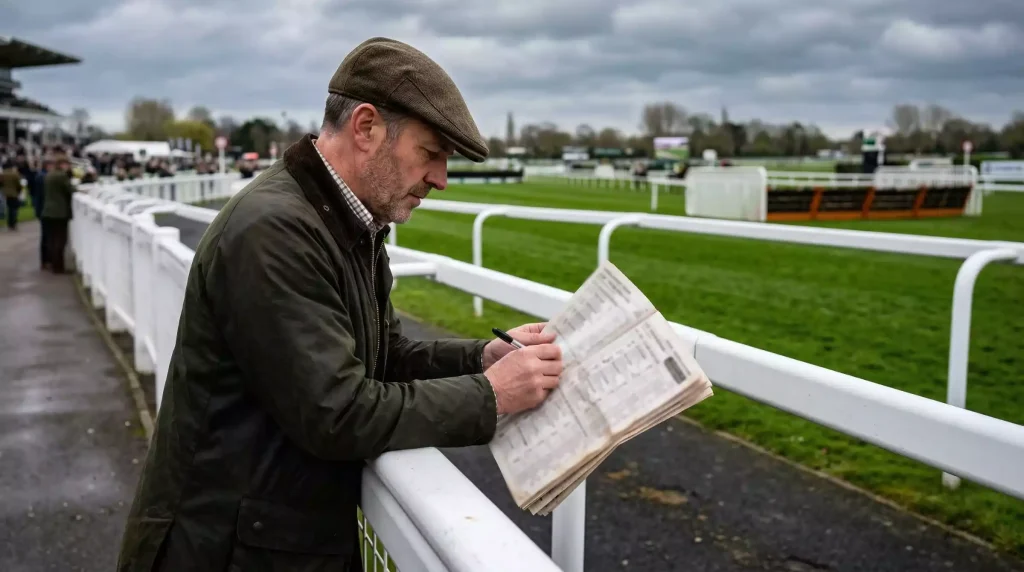
The Grand National has a well-earned reputation as the most unpredictable race in the calendar. Horses fall, favourites disappoint, outsiders emerge from nowhere, and the whole thing unfolds over four miles of chaos that would make any sensible analyst reach for a stiff drink. It is tempting, given all of that, to abandon analysis altogether and just pick a horse with a good name.
Tempting, but wrong. The Grand National is hard to predict — that much is undeniable. But “hard to predict” is not the same as “impossible to analyse.” There are patterns in the data, trends in the results, and measurable factors that tilt the odds in certain directions. Trainers with a track record at Aintree win more often than those without. Horses carrying the right weight finish more often than those burdened at the top of the handicap. Ground conditions reshape the race every single year. None of these factors deliver certainties, but collectively they offer a framework for backing smarter rather than backing blind.
This guide covers the analytical tools that matter most for the Grand National: how to read the form book for a steeplechase this demanding, what weight and age data tells us, why the going at Aintree deserves your attention, which trainers and jockeys have records worth noting, how to identify value in the market, and how to manage your bankroll so that a losing bet does not ruin an otherwise enjoyable afternoon. The aim is not to turn you into a professional — it is to give you a better chance of making your bet count.
Reading the Form Book: What Matters for the Grand National
Form analysis for the Grand National is different from form analysis for a five-furlong sprint at Ascot. The race tests stamina, jumping ability, temperament, and luck in roughly equal measure, and the form book needs to be read through that lens rather than through the conventional one of speed ratings and class levels.
What to Look For
Stamina credentials. The Grand National is run over four miles and two-and-a-half furlongs. Only a handful of races in the calendar come close to that distance, so pure form at the trip is scarce. Instead, look for horses that have won or performed well over three miles or further in their recent runs. Horses that have contested the Welsh Grand National (3m 5f), the Scottish Grand National (4m), the Midlands Grand National (4m 2f) or other marathon chases provide the closest form reference. A horse whose best run was over two miles at Sandown is a different animal entirely.
Jumping record. Thirty fences, many of them unique to Aintree, require a horse that is bold, accurate and able to recover from a mistake without losing its rhythm. Look at the horse’s recent chase form for evidence of clean jumping — and pay close attention to what happened at Aintree specifically. Horses that have run over the National fences before, even in the Topham Trophy or the Becher Chase, have a meaningful advantage over those encountering the course for the first time.
Class and consistency. The Grand National is a handicap, which means every horse carries a weight designed to give it an equal chance. But the handicapper is working with imperfect information, and horses that have recently improved — or been given a lenient mark after a quiet spell — can carry less weight than their true ability deserves. Identifying these “well-handicapped” runners is one of the core skills of Grand National form analysis.
What Not to Rely On
Here is where the data gets interesting — and humbling. According to a Ladbrokes/Entain survey from 2026, 35% of British punters pick their Grand National horse based on the name alone, and fewer than 29% consider the horse’s form at all. That is a staggering amount of money entering the market on little more than whimsy, and it cuts both ways. On one hand, it means the market is inefficient — prices are partly driven by sentiment and name recognition rather than cold analysis. On the other, it means that even a modest amount of form reading gives you an edge over a third of the betting public.
What you should not rely on is recent flat form, form over hurdles (which are smaller obstacles and test different skills), or short-distance chase form. A horse that won a two-mile chase at Kempton in November may well be a talented animal, but the Grand National asks different questions. Past winners of the race almost always had at least some form over three miles or further before taking on Aintree.
Where to Find Form Data
The Racing Post, Timeform and the At The Races website all provide detailed form guides for every Grand National runner. These include recent race results, jockey and trainer records, course form, distance form, going preferences and official ratings. Most of this information is free — and spending twenty minutes reading through the form of the leading contenders puts you ahead of the majority of the betting public.
Weight, Age and Past Performance: What the Data Says
Every Grand National runner carries a weight allocated by the BHA handicapper, ranging from around 10 stone at the bottom of the handicap to 11 stone 10 pounds (or occasionally higher) at the top. That weight reflects the handicapper’s assessment of each horse’s ability, and it has a measurable effect on performance over four exhausting miles.
The Weight Trend
The historical data is reasonably clear: horses carrying the heaviest weights in the Grand National have a poor record. The topweight has not won since the days of much smaller fields and less competitive handicaps. Most recent winners have carried between 10 stone 3 pounds and 11 stone, with the sweet spot sitting around 10 stone 7 pounds to 10 stone 12 pounds. Horses above 11 stone 4 pounds face a significant statistical headwind.
The reason is straightforward physics. Over four miles and thirty fences, every extra pound accumulates as fatigue. A horse carrying 11 stone 10 pounds over the final half mile is hauling nearly 10 pounds more than a rival at the bottom of the weights, and in a race decided by staying power and jumping ability in the closing stages, that margin matters. It does not mean the topweight cannot win — it means you should have a strong reason for backing one.
The Age Factor
Grand National winners tend to be aged between eight and eleven, with the most productive age range being nine and ten. Younger horses — seven-year-olds are the minimum age for entry — can lack the experience and physical development needed for such a demanding race. Older horses — twelve and above — have the experience but often lack the stamina reserves to sustain their effort over the full distance.
There are exceptions, naturally. Tiger Roll won as an eight-year-old and again as a nine-year-old. But the overall trend is consistent enough to be worth factoring into your analysis. A ten-year-old carrying 10 stone 8 pounds fits the historical profile better than a seven-year-old carrying 10 stone or a thirteen-year-old at the top of the weights.
Completion Rate
The Grand National’s attrition rate shapes every other trend. In the 2026 running, 21 of the 32 starters made it to the finish line — roughly two-thirds of the field. That completion rate varies from year to year depending on the going, the pace, and sheer luck at the fences, but it consistently means that a significant portion of the field will not finish. For practical purposes, this means backing a horse with a clean completion record — one that has consistently finished its races over fences rather than falling or pulling up — is a genuine edge. A fast horse that falls at the third fence scores you zero, regardless of what the form book says about its ability.
When combining weight, age and completion history, you begin to build a profile: a horse aged nine or ten, carrying between 10st 5lb and 11st, with proven stamina over three miles or more and a clean record of completing its races. Not every winner fits that profile — the Grand National guarantees nothing — but the majority of them do, and narrowing your attention to horses that match it is a sensible starting point.
Ground Conditions at Aintree: How the Going Shapes the Result
The going — the condition of the ground on race day — is one of the most powerful variables in the Grand National, and it is one that most casual punters overlook entirely. A horse that excels on good-to-soft ground can be a different animal on heavy going, and vice versa. Aintree in April can serve up anything from good-to-firm (rare) to soft or heavy (not uncommon after a wet spring), and the going often changes between the morning inspection and the afternoon race.
How Going Is Measured
The going at Aintree is assessed using a GoingStick — an electronic device that measures the moisture and shear strength of the turf. The scale runs from firm at the top to heavy at the bottom, with the standard descriptions being: firm, good to firm, good, good to soft, soft, and heavy. The official going is published on the morning of race day and updated if conditions change due to rain or drying wind.
What the Going Means for Your Bet
Soft or heavy ground increases the stamina demands of an already stamina-sapping race. Horses that stay well and jump accurately tend to come to the fore. Fast ground, by contrast, allows speedier types to maintain their rhythm and can reduce the number of fallers at the fences. Most Grand Nationals are run on good to soft or soft ground, which suits strong-galloping stayers rather than speed merchants.
Check each horse’s form on the prevailing going. Racing form guides list a horse’s record by going type — for example, “Form on soft: 2-1-0-3” means two wins, one second, zero thirds and three unplaced runs on soft ground. A horse with multiple wins on soft ground running on a soft day at Aintree is a more confident bet than one whose wins have all come on good-to-firm.
Course Changes and Their Impact
The Grand National course itself has undergone significant modifications in recent years, affecting how the going interacts with the fences. Since 2026, the maximum field has been reduced from 40 to 34 runners, and several fences have been repositioned — most notably Becher’s Brook, which was moved 60 yards closer to the start to reduce the speed at which horses approach it on the first circuit. These changes alter the race’s dynamic: smaller fields mean less congestion at the early fences, and repositioned obstacles change the rhythm of the gallop. Ground conditions interact with these changes in ways that are still being understood, but the overall direction is toward a race that rewards jumping accuracy and stamina over raw speed.
The practical advice is simple but important: do not place your Grand National bet until you have checked the going. The official going report is available on the Aintree and BHA websites from the morning of the race, and it can shift your assessment of the entire field.
Trainers and Jockeys: Records That Matter at Aintree
The Grand National is not won by horses alone. The trainer’s preparation and the jockey’s decision-making are critical components, and certain combinations have a demonstrably better record at Aintree than others. Ignoring the human element is like analysing a football match without looking at the manager or the centre-forward.
Trainer Records
The most striking recent example is Willie Mullins. The Irish champion trainer had long been associated with Cheltenham Festival dominance, but the 2026 Grand National saw Mullins field five of the first seven horses home, with Nick Rockett — trained by Mullins and ridden by his son Patrick — winning at 33/1. That level of domination in a 34-runner handicap is almost without precedent and underlines the importance of stable strength. When a trainer enters multiple runners, they spread their chances across the field and increase the probability that at least one of their horses runs into the frame.
Beyond Mullins, trainers with a consistent Grand National record include Lucinda Russell (winner with One For Arthur in 2017), Gordon Elliott (multiple placed runners and a history of targeting the race with multiple entries), and Nigel Twiston-Davies (two winners: Earth Summit and Bindaree). A trainer who actively targets the Grand National — rather than entering a horse as an afterthought — tends to prepare specifically for Aintree’s unique demands: schooling over replica fences, building fitness for the extreme distance, and timing the horse’s preparation to peak in early April.
Jockey Records
The jockey’s role in the Grand National is more important than in almost any other race. Over four miles and thirty fences, the rider needs to manage the horse’s energy, choose racing lines at each obstacle, avoid trouble in the pack, and make tactical decisions that can only come from experience. First-time Grand National jockeys face a steep learning curve; riders who have completed the course multiple times know where the dangers lie and how to conserve their mount’s stamina for the final half-mile.
The importance of Aintree expertise in the saddle cannot be overstated. “Due to the open nature of the race and the big-priced odds on offer, we expect huge interest in bets across the country,” said Lee Phelps of William Hill ahead of the 2026 renewal — and that openness means the jockey’s ability to navigate the chaos often matters as much as the horse’s raw ability. Riders like Rachael Blackmore, Davy Russell, and the amateur Patrick Mullins have all demonstrated that experience over the National fences translates into results.
How to Use This in Your Betting
When assessing Grand National runners, give extra weight to horses trained by yards with a proven Aintree record and ridden by jockeys who have completed the course before. A horse with strong form but an inexperienced jockey and a trainer with no Grand National pedigree is a riskier proposition than one whose connections have done this before. The form book tells you about the horse; the trainer and jockey records tell you about the humans behind it — and in the Grand National, back smarter, not harder, by considering both.
Finding Value: How to Spot Overpriced and Underpriced Runners
Value betting is the single most important concept in profitable gambling, and it is also the most misunderstood. Value does not mean backing longshots. It does not mean finding the winner. It means identifying horses whose odds are longer than their true probability of winning justifies — and the Grand National, with its enormous field and inefficient market, is one of the best opportunities in the racing calendar to find it.
What Value Looks Like
Imagine you believe, based on your analysis, that a horse has roughly a 10% chance of winning the Grand National. A 10% chance translates to fair odds of 9/1. If that horse is trading at 14/1, it represents value — you are being offered a better price than your assessment suggests it deserves. If the same horse is trading at 6/1, it is underpriced relative to your view, and backing it means accepting worse odds than the probability warrants.
The challenge, obviously, is arriving at a credible probability estimate. You are not a bookmaker’s trading team with algorithms and real-time data feeds. But you do not need to be. Even a rough estimate — “I think this horse has a better chance than 25/1 suggests, probably more like a 16/1 or 20/1 chance” — is enough to identify the direction of value. You are not trying to nail the exact probability; you are trying to figure out whether the market is under- or over-estimating a horse’s chance.
Where Value Hides in the Grand National
Value tends to cluster in a few places in the Grand National market. First, horses from less fashionable yards that do not attract casual money — while punters pile into runners from Mullins, Elliott and Henderson, a well-prepared horse from a smaller stable can be overlooked and trade at longer odds than its form deserves. Second, horses returning from a break who have run well over the National fences before — the market sometimes underprices course experience, particularly for horses that have been absent long enough to slide off the public’s radar. Third, horses at the top of the handicap whose weight allocation is partially offset by their class — a 10/1 shot carrying 11 stone 2 pounds may be over-bet because of the weight, when in reality the horse’s ability is so far above the field that the weight is manageable.
When Value Is Not Enough
Finding value does not guarantee a winning bet. A horse at 20/1 that you assess as a genuine 12/1 chance is still, by your own estimation, likely to lose. Value betting works over a large number of bets, where the accumulated edge of consistently backing overpriced horses produces a positive return in the long run. On a single race, you can be right about the value and still lose. That is the nature of the game, and it is why value betting must be paired with sensible bankroll management — which is where the final section of this guide comes in.
Bankroll Management: Setting Limits Before You Bet
Every betting tip in the world is worthless if your stake is wrong. Bankroll management is not a glamorous topic — nobody boasts about it in the pub — but it is the difference between enjoying the Grand National as entertainment and watching it with a knot in your stomach because you have wagered more than you can afford to lose.
Set a Budget Before You Start
Decide what you are prepared to spend on Grand National day and treat that number as an absolute ceiling, not a guideline. The amount should be money you can lose entirely without it affecting your bills, your savings, or your mood the following week. For most people betting on the Grand National, this is a modest sum. Entain’s data from 2026 shows that 82% of cash bets on the race were £5 or less, and nearly 50% of the total turnover came from these small stakes. The typical Grand National punter is not wagering hundreds — they are spending the price of a coffee on a few minutes of excitement.
If your budget is £20, that is your bankroll. You might place a single £10 each-way bet (costing £20), or two £5 each-way bets on different horses (costing £20), or a £10 win-only bet and keep the other £10 for a separate each-way on a longshot. How you divide it is up to you. What matters is that the total does not exceed the number you set at the start.
Do Not Chase Losses
The Grand National is one race. If your horse falls at the first fence, the temptation is to immediately place another bet on the next race at the Aintree Festival to “make it back.” Resist that impulse. Chasing losses is the most reliable way to turn a small, manageable loss into a large, regrettable one. The races after the Grand National are not going to be kinder to you just because the National was unkind.
Use Bookmaker Tools
Every licensed UK bookmaker is required to offer deposit limits, loss limits and session time limits. Setting a deposit limit equal to your Grand National budget is the simplest and most effective form of bankroll management available. Once the limit is hit, you cannot deposit more — even if you want to. It removes the decision from the moment of temptation and places it in the calm, rational moment when you first set it up.
Some bookmakers also offer reality checks — periodic notifications that tell you how long you have been logged in and how much you have spent. These are useful on a busy race day when the adrenaline is flowing and the time between races feels short. Opt in if the option is available.
The Right Mindset
Think of your Grand National bet as entertainment spending, not investment spending. You are paying for the experience of having a stake in one of the most exciting sporting events of the year. If your horse wins, the return is a bonus. If it loses, you have spent £10 or £20 on an afternoon of genuine entertainment — roughly the cost of a cinema ticket and a bag of popcorn. Frame it that way, and the result matters less than the experience. That is the mindset that lets you enjoy the Grand National every single year, whether your horse wins or falls at the first.